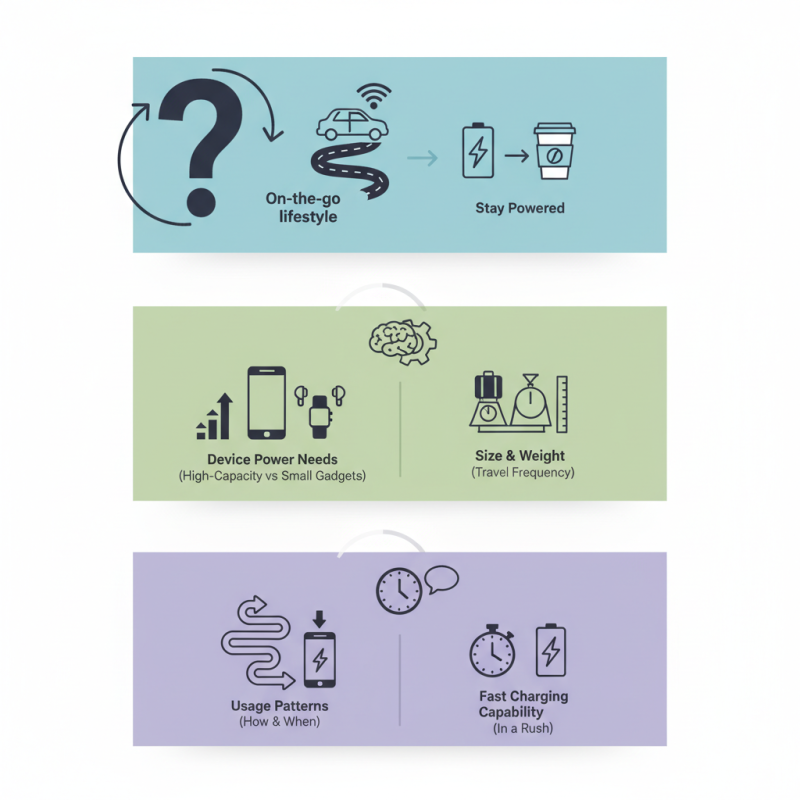
In today's fast-paced world, having the right portable DC charger is essential. Whether you're on a road trip or at a busy café, keeping your devices powered is crucial. However, many people are unsure how to choose the right portable DC charger. This decision isn’t just about picking a random option or going with the cheapest choice. It's about understanding your specific needs.
A portable DC charger should match your devices' power requirements. Some chargers are designed for high-capacity devices, while others cater to smaller gadgets. If you frequently travel, consider the charger’s weight and size. It’s easy to overlook these details, yet they greatly impact your experience. Many users find themselves frustrated when their charger can't deliver the needed charge within a reasonable time.
Analyzing your usage patterns can help refine your choices. Think about how often you charge your devices and under what circumstances. Are you often in a rush? Choosing a charger with fast charging capabilities might be essential. Reflecting on these aspects will ensure that when you need to know how to choose the right portable DC charger, you make informed decisions that fit your lifestyle.
Understanding the importance of a portable DC charger cannot be overstated. In our digital world, mobile devices are lifelines. A recent report by the International Data Corporation states that over 3.5 billion smartphone users globally rely on their devices daily. This dependence makes a reliable power source essential, especially during travel or emergencies.
Portability increases the need for effective charging solutions. A study conducted by Juniper Research indicated that by 2025, the global portable charger market is projected to reach $3.1 billion. This shows that users recognize the need for accessible energy. However, not all portable chargers are created equal. Many lack safety features or efficient charging capabilities, which can lead to device damage or fire hazards.
Daily life presents various scenarios where you may not have direct access to an outlet. Outdoor activities, long commutes, or power outages leave you vulnerable. Picking the right DC charger is about safety and practicality. Quality chargers deliver faster charging times, often in under two hours. Knowing what to look for is crucial for ensuring both your device's longevity and your peace of mind.
| Feature | Importance | Considerations |
|---|---|---|
| Capacity (mAh) | Determines how many devices can be charged and how long it lasts | Choose according to your devices' power needs |
| Output Voltage | Compatibility with various devices | Make sure it matches the input requirement of your devices |
| Portability | Ease of transport and use | Lightweight and compact designs are preferable |
| Charging Speed | Time-saving while charging devices | Look for higher output ratings (e.g., 2.4A) |
| Safety Features | Prevents device damage and ensures user safety | Features like overcharge and short-circuit protection |
: A reliable charger ensures safe and efficient power delivery to your devices.
A versatile voltage range enhances usability for devices operating at different voltages.
Higher capacity chargers can recharge devices multiple times, but size matters too.
A bulky charger might hinder portability, so find a suitable balance for your needs.
Fast-charging technology reduces downtime, allowing quicker power-ups for modern devices.
Choose chargers with built-in safety systems to avoid excess heat during operation.
Regularly check for damage and clean ports to ensure optimal charging efficiency.
Extreme heat or cold can impact efficiency; avoid leaving your charger in harsh environments.
Overcharging can reduce battery life, so disconnect devices once fully charged.
Try different settings and monitor performance; sometimes, adjustments are needed for optimal use.
When considering how to choose the right portable DC charger, it is essential to understand its significance in today’s mobile-dependent lifestyle. A portable DC charger provides the convenience of charging your devices on-the-go, ensuring that you stay powered up and connected. Key features to consider include compatibility with your devices, battery capacity, and charging speed. Evaluating these elements helps ensure that the charger will meet your needs effectively.
Additionally, it is crucial to assess how well the charger works with your specific devices to avoid any compatibility issues. Understanding battery capacity allows you to select a charger that can provide multiple charges or fast charging capabilities, enhancing your user experience. Lastly, implementing proper maintenance tips will prolong the life of your portable DC charger, ensuring it remains a reliable resource for your charging needs.

 LA Charger