China’s rapid electric vehicle growth has created strong demand for reliable DC charging infrastructure. Solar powered DC chargers offer a practical response, especially in sunny industrial parks, highway rest areas, and rural communities. This article examines why solar powered dc chargers are sustainable through energy use, equipment design, and real operating conditions. Solar panels convert sunlight directly into electricity. DC charging can then reduce conversion steps between generation, storage, and vehicle batteries. That arrangement may lower energy losses when the system is properly designed.
The environmental value depends on more than the panels themselves. A well-planned charger can combine solar generation, battery storage, and intelligent load management. During midday, excess electricity can charge the battery. At night, stored energy can support vehicles or local equipment. This improves renewable energy use and may reduce pressure on the public grid. However, cloudy weather, land requirements, battery degradation, and manufacturing emissions remain important concerns. Sustainability is not automatic.
Reliable evaluation should include the full equipment lifecycle. Engineers need to assess panel efficiency, charger durability, battery replacement, recycling routes, and maintenance access. Chinese projects also benefit from strong manufacturing capacity and expanding clean-energy deployment. Yet performance varies between regions and installations. A charger in northern winter conditions may behave differently from one in southern sunlight. Some systems still depend on grid electricity. That fact deserves attention. By examining measured energy output, operating costs, safety controls, and lifecycle impacts, readers can make a more balanced judgment about solar-powered DC charging in China.
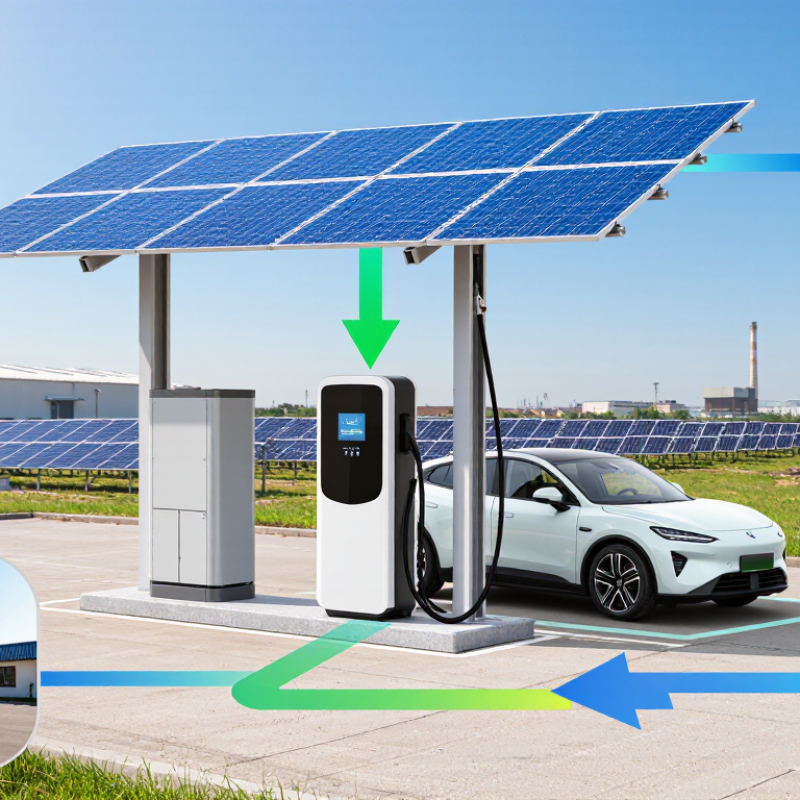
China solar-powered DC chargers are electric vehicle charging systems that use photovoltaic panels to generate electricity. Unlike ordinary AC chargers, they convert power into direct current before it reaches the vehicle battery. This can reduce charging time when the system has enough sunlight and suitable power capacity.
A typical installation includes solar panels, a power controller, protection equipment, and sometimes a battery storage unit. The storage unit can hold daytime energy for evening charging. Some systems also connect to the grid when sunlight is weak. This arrangement improves availability, but it is not completely independent. Shade matters. Dust matters too. In practical installations, panel angle, local weather, and cable distance affect charging performance. A reliable system should include temperature monitoring, surge protection, and clear maintenance procedures.
The sustainability claim needs careful thinking. Solar generation can lower dependence on fossil-fuel electricity and reduce operating emissions over time. However, panels, batteries, and electronic parts require raw materials, transport, and eventual recycling. The charger is cleaner during use, not impact-free. Overselling this point weakens trust. Engineers should compare the full life cycle, expected sunlight, battery replacement needs, and daily charging demand. With accurate sizing and regular cleaning, solar-powered DC chargers can provide useful low-carbon charging at workplaces, parking areas, and roadside facilities. Poor planning can leave expensive equipment underused.
Solar-powered DC chargers can reduce charging-related emissions by using electricity generated from photovoltaic systems instead of carbon-intensive fossil-fuel generation. The chart compares median lifecycle greenhouse-gas emissions for major electricity sources, including manufacturing, construction, operation, and decommissioning.
Data source: IPCC Fifth Assessment Report, median lifecycle emission factors. Actual results depend on solar irradiation, system efficiency, battery storage, grid backup, and charger utilization.
Solar-powered DC chargers convert sunlight into usable charging current through a carefully managed electrical path. Photovoltaic panels generate variable direct current as sunlight changes. An MPPT controller adjusts the operating point to capture more available energy. A battery buffer can store midday power and release it during evening charging. The DC charger then regulates voltage and current for the vehicle, avoiding unnecessary conversion between direct and alternating current.
A practical site might use rooftop panels above a parking area, with cables leading to a controller and a compact battery cabinet. On a clear afternoon, the system can serve several vehicles while maintaining stable output. Dust, heat, cloudy weather, and winter sunlight still reduce performance. That part is easy to underestimate. Regular panel cleaning, thermal monitoring, and electrical testing help maintain dependable operation. Grid support may also be necessary when demand exceeds solar production.
This design can reduce fossil-fuel electricity use and lower transmission losses near the charging point. It also makes use of buildings, depots, and shaded parking spaces that might otherwise remain inactive. However, sustainability is not automatic. Batteries require material extraction, and worn components need responsible recycling. Local installers must assess sunlight levels, traffic patterns, drainage, fire safety, and maintenance access before construction. A smaller charger matched to real demand may perform better than an oversized system. The numbers should be measured over seasons, not judged from one bright day.
Solar-powered DC chargers combine photovoltaic modules, direct-current electronics, and carefully selected structural materials. The IEA PVPS Trends 2024 report estimates global photovoltaic capacity exceeded 1.6 terawatts by the end of 2023. That scale matters.
Silicon cells generate electricity, while tempered glass protects them from rain and hail. Aluminum frames resist corrosion and remain highly recyclable. Copper wiring carries current with low electrical loss. Recycled steel can support the cabinet and mounting structure.
Compared with repeated AC conversions, direct DC charging can reduce energy conversion stages. Maximum-power-point tracking extracts more electricity during changing sunlight. Battery storage can support evening charging, especially when paired with transparent mineral sourcing and recovery plans.
IEC 61851-based controls help manage isolation, temperature, and electrical faults. Still, batteries and circuit boards have environmental costs. Solar panels also require mining, manufacturing energy, transport, and eventual recycling.
IRENA’s Renewable Power Generation Costs in 2023 report places utility-scale solar PV’s global weighted average cost at about $0.044 per kilowatt-hour. It reports a 90% decline from 2010. That is impressive, not perfect.
Tips: Ask for material declarations, measured conversion efficiency, and repair information. Check whether installers record energy yield, battery health, and fault events. Choose replaceable cables and accessible housings. Dust is not theoretical. Real sustainability depends on maintenance, recycling, and honest performance data over many years.
Solar-powered DC chargers can cut emissions by using electricity where it is generated. Rooftop panels convert sunlight into direct current, reducing conversion losses before vehicle charging begins. The International Energy Agency reported that solar power supplied about 5.5% of global electricity in 2023. China remains a major driver of this expansion. In practical use, a sunny parking area can charge vehicles without drawing full power from the grid.
This matters during peak demand. A local solar charging system can reduce pressure on transformers and avoid some electricity transmission losses. Battery storage can hold midday energy for evening charging. The IEA’s Global EV Outlook 2024 estimated that electric vehicles consumed about 130 TWh worldwide in 2023, still below 0.5% of global electricity demand. Solar charging helps this demand grow more cleanly.
The climate benefit depends on system design. IRENA’s Renewable Power Generation Costs in 2023 found that utility-scale solar costs fell about 90% from 2010 to 2023. Lower costs improve deployment, but panels, batteries, and chargers still require minerals and manufacturing energy. Solar power is not automatically zero-carbon. Poorly sized storage may increase waste or rely on grid electricity at night. Operators should publish energy sources, charging efficiency, and lifecycle emissions. That transparency builds trust. More field data is still needed.
Solar-powered DC chargers can reduce charging emissions by generating electricity near the vehicle. Their sustainability depends on more than rooftop panels. In field assessments, dust, heat, and partial shading often reduce daily output. A charger may promise clean energy, yet still draw grid electricity during cloudy evenings. That assumption can fail.
Battery storage creates another long-term concern. Lithium-based batteries gradually lose capacity after repeated charging cycles. High temperatures can accelerate this decline. Replacing storage units also requires raw materials, transport, and careful recycling. Operators need transparent data about battery health, energy losses, and replacement schedules. Without those records, sustainability claims remain difficult to verify.
Maintenance affects the equipment’s useful life. Damaged cables, blocked ventilation, and dirty panels can lower performance within weeks. Remote monitoring helps, but sensors and software also need updates. Rural sites face additional problems, including weak networks, limited repair access, and seasonal weather. Water-resistant housings reduce risk, but they do not eliminate corrosion. I would not describe every solar charger as sustainable. The result depends on responsible sourcing, trained technicians, realistic usage forecasts, and an end-of-life plan for panels, batteries, and power electronics. Some installations still need grid support. That is not automatically a failure, but it should be measured honestly.
| Sustainability Dimension | Typical Data or Range | Why It Supports Sustainability | Long-Term Challenge | Practical Mitigation |
|---|---|---|---|---|
| Renewable energy source | Solar photovoltaic systems generate electricity without direct fuel combustion during operation. | Reduces dependence on fossil-fuel electricity and can provide low-carbon charging where solar resources are adequate. | Output varies with weather, season, shading, and daylight hours. | Combine solar generation with grid support, energy storage, load management, and accurate local solar-resource assessment. |
| Life-cycle greenhouse-gas emissions | Utility-scale solar PV commonly reports approximately 20–50 g CO2-equivalent per kWh over its life cycle; results vary by technology, location, and manufacturing energy mix. | This is generally far below the life-cycle emissions of coal-fired electricity and lower than many fossil-fuel-based power sources. | Manufacturing, transport, installation, replacement, and recycling add embodied emissions. | Use high-efficiency modules, extend equipment life, improve supply-chain transparency, and recycle materials at end of life. |
| Direct-current energy pathway | Solar panels and most electric-vehicle batteries use DC electricity, allowing a system to reduce unnecessary AC/DC conversion steps. | Fewer conversion stages can reduce energy losses, component count, and cooling requirements. | Direct-DC systems require compatible protection, controls, connectors, and vehicle interfaces. | Use certified power electronics, galvanic isolation where required, protection against overcurrent, and standardized communication protocols. |
| Charging efficiency | Overall solar-to-battery efficiency is commonly affected by PV, wiring, controller, storage, and charger losses; practical system efficiency may be approximately 70–90%, depending on architecture and operating conditions. | Higher efficiency means more of the generated solar energy reaches the vehicle battery. | Battery storage and multiple conversion stages can materially reduce efficiency, especially at low power or partial load. | Use appropriately sized equipment, short cable runs, efficient converters, and intelligent charging schedules. |
| Photovoltaic service life | Many crystalline-silicon PV modules are designed to operate for approximately 25–30 years, with gradual output degradation. | Long service life spreads manufacturing emissions and installation costs over many years of electricity production. | Heat, humidity, salt exposure, mechanical stress, and poor installation can accelerate degradation. | Specify suitable environmental ratings, maintain drainage and ventilation, inspect cabling, and monitor performance degradation. |
| Battery durability | Stationary lithium-ion storage commonly lasts about 5–15 years, depending on chemistry, temperature, depth of discharge, and cycling frequency. | Storage can increase solar self-consumption and provide charging after sunset or during short periods of low solar output. | Battery replacement creates additional material demand, cost, and end-of-life management requirements. | Use thermal management, battery-management systems, conservative operating limits, repairable designs, and documented recycling routes. |
| Water consumption during operation | Solar PV electricity generation generally requires very little operational water compared with thermoelectric power generation. | Can reduce pressure on freshwater resources, especially in regions where water availability is limited. | Dust accumulation can reduce output, while frequent cleaning may require water in arid locations. | Use dry or low-water cleaning methods where feasible and schedule cleaning according to measured performance loss. |
| Grid independence and resilience | Solar-powered DC chargers can operate with limited grid capacity when paired with batteries and suitable energy controls. | Supports charging in remote or weak-grid locations and can reduce peak demand from the electricity network. | Off-grid operation requires adequate storage, backup planning, cybersecurity, and reliable maintenance. | Design for critical-load priorities, include remote monitoring, maintain spare parts, and test backup operating modes. |
| Land and siting requirements | Ground-mounted PV requires physical space; the exact land requirement depends on module efficiency, layout, access paths, and shading constraints. | Can use rooftops, parking canopies, brownfields, or already-developed transport sites to limit additional land conversion. | Poor siting may compete with agriculture, habitats, or community priorities. | Prioritize rooftops and developed land, conduct environmental assessments, and use dual-use or canopy designs where appropriate. |
| Material and resource use | Systems use materials such as glass, aluminum, steel, copper, semiconductor materials, and battery minerals. | Long operating life and material recovery can reduce the need for repeated new equipment. | Mining impacts, supply-chain concentration, and difficult-to-recover composite materials may affect sustainability. | Apply responsible procurement, design for disassembly, increase recycled content, and require supplier environmental documentation. |
| End-of-life management | PV modules, batteries, inverters, chargers, and cabling require separate collection, testing, reuse, or recycling pathways. | Recovering glass, aluminum, copper, and selected battery materials can reduce waste and primary-resource demand. | Recycling infrastructure, transport logistics, and local regulations differ by region. | Maintain asset inventories, use certified recyclers, plan removal costs in advance, and avoid informal disposal. |
| Maintenance and reliability | Performance depends on periodic inspection of modules, connectors, charge controls, batteries, cooling systems, and safety devices. | Preventive maintenance extends asset life and preserves energy yield, reducing premature replacement. | Remote sites may face limited technician access, spare-parts delays, dust, corrosion, and extreme temperatures. | Use remote diagnostics, modular components, preventive inspection schedules, weather-appropriate enclosures, and local service capability. |
| Economic sustainability | Financial performance depends on solar yield, utilization rate, battery size, electricity prices, incentives, financing, and replacement costs. | Solar energy can reduce operating electricity costs and demand charges over the system’s service life. | High upfront costs and battery replacement can lengthen the payback period, particularly for low-use chargers. | Match charger capacity to demand, use staged deployment, optimize storage size, and evaluate total life-cycle cost rather than purchase price alone. |
It uses solar panels to produce electricity and sends direct current to an electric vehicle battery. Charging can be faster.
A typical system includes solar panels, a power controller, safety equipment, cables, and sometimes battery storage. Some installations also use grid power.
Sometimes, but not always. Weak sunlight, cloudy evenings, or high charging demand may require grid support.
Storage holds extra daytime energy for evening charging. It acts like a reserve tank. Battery capacity still limits usage.
They generate electricity near the vehicle, reducing some transmission and conversion losses. Their climate benefit depends on the complete system.
No. Panels, batteries, transport, and electronic parts require materials and energy. The charger is cleaner during use, not impact-free.
Dust, shade, heat, poor panel angles, and cloudy weather can reduce energy output. A dirty panel may perform poorly within weeks.
Operators should clean panels, inspect cables, monitor temperature, and check ventilation. Sensors and software also need updates.
Battery capacity gradually declines after repeated charging cycles. High temperatures can accelerate this process. Replacement timing should be recorded.
They should measure energy sources, charging efficiency, battery health, replacement needs, and lifecycle emissions. Claims need evidence.
China solar-powered DC chargers combine photovoltaic panels, energy storage, power-control equipment, and direct-current charging outlets in one integrated system. They convert sunlight into electricity that can charge electric vehicles directly or store energy for later use. This design reduces the need for repeated AC-to-DC conversion and can support charging in locations with limited grid access. The use of recyclable metals, durable protective enclosures, efficient batteries, and intelligent energy-management systems further improves resource efficiency and operational reliability.
The main reason why solar powered dc chargers are sustainable is that they can reduce dependence on fossil-fuel-based electricity, lower charging-related emissions, and make better use of renewable energy. They may also ease pressure on local grids during periods of high demand. However, long-term sustainability depends on factors such as sunlight availability, battery lifespan, equipment maintenance, recycling systems, and responsible material sourcing. Ongoing improvements in storage technology, component durability, and end-of-life management will be essential for maximizing their environmental benefits.

LA Charger